Introduction: the disruptive role of AI
The global construction industry is on the verge of an epochal transformation. AI is rapidly shifting the sector from manual and reactive processes to predictive and optimized workflows. AI integrates along the entire project lifecycle: from generative design to site management, through to maintenance and energy performance monitoring. Its impact is disruptive: AI can process vast amounts of data – BIM, GIS, images – in seconds that would take weeks manually, significantly improving design accuracy, drastically reducing on-site errors, and the enormous associated material waste.
Design and pre-construction pioneers
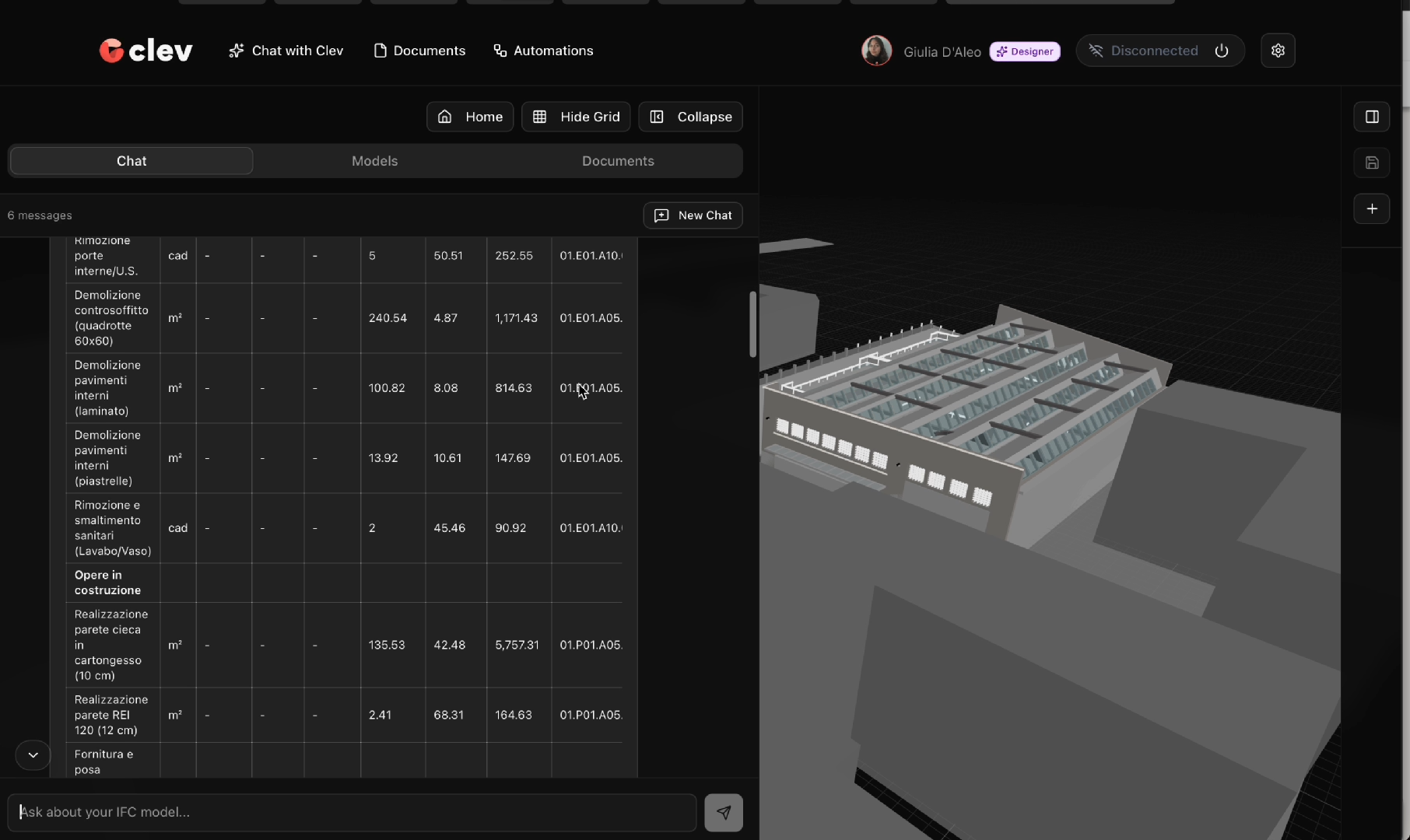
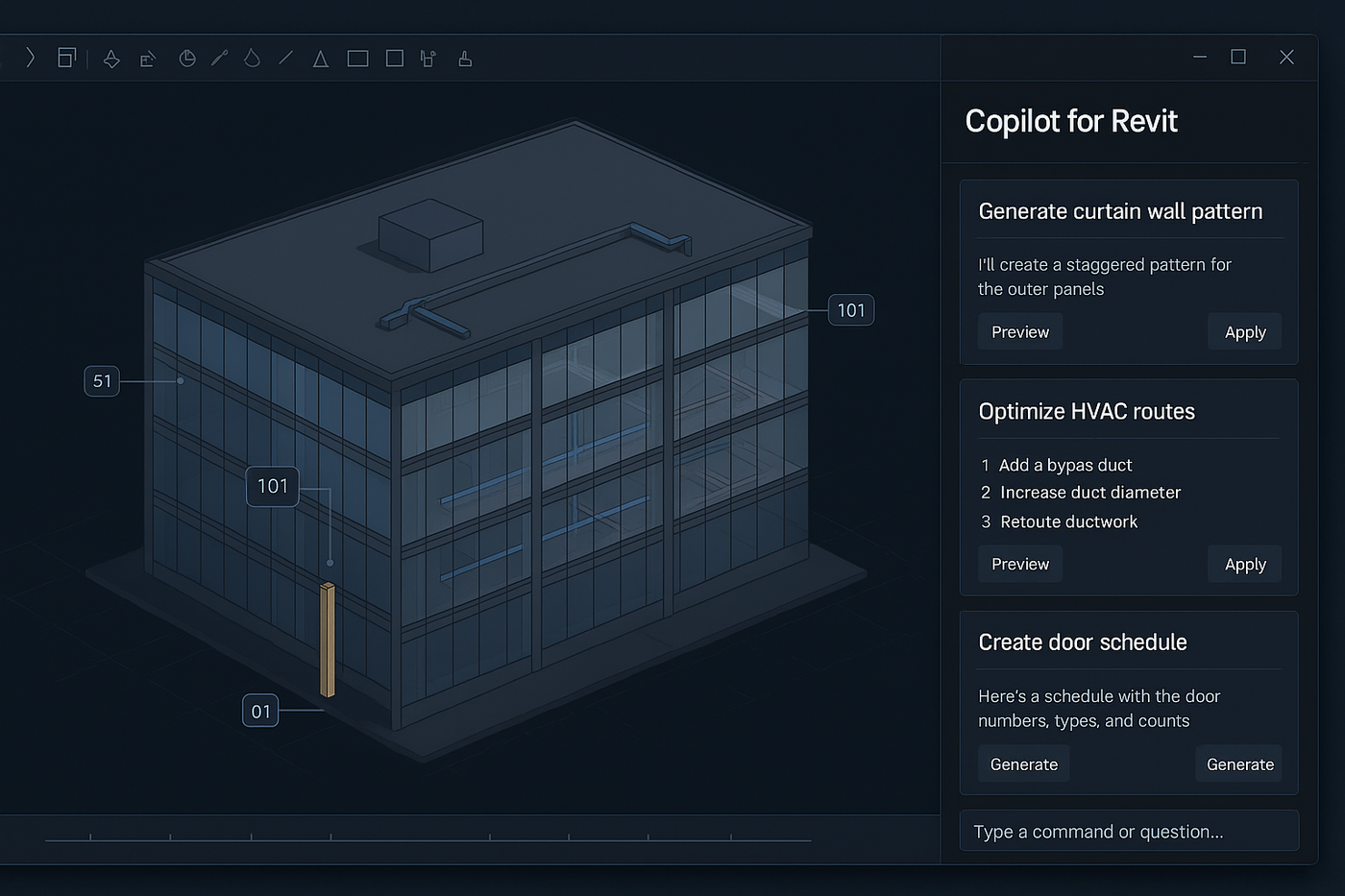
Clev stands as a BIM/CAD AI copilot dedicated to accelerating project iterations and centralizing complex data management. Its AI capabilities drastically reduce review times (up to 80%) by eliminating the need for hundreds of disjointed plugins. Clev automatically performs 100% compliance verification against norms, ISO standards, and client-specific rules, and automates workflows such as Quantity Takeoff (QTO). ArchiLab acts as an AI copilot specifically for Revit, transforming traditional BIM workflows through intelligent automation – allowing architects and engineers to focus on creativity rather than manual data manipulation.
Sustainability and material choice enablers
OneClick LCA provides AI-powered Life Cycle Assessment software that transforms how sustainability is managed in construction. The embedded AI streamlines the complex process of data mapping for materials, achieving 10× faster and more reliable data flows by resolving inconsistencies across multiple languages. This allows designers to automatically verify results against industry benchmarks, compare design alternatives, and quickly explore optimized construction scenarios to meet demanding decarbonization targets.
Operation, energy and asset managers
Becquerel Institute Italia focuses its AI expertise on the photovoltaic sector. Their AI solutions offer specialized services including AI Assessment & Roadmap to strategically plan the integration of AI and robotics into the PV value chain, customized Use Case Development, and Custom Implementation designed to optimize solar asset performance, predict maintenance needs, and maximize long-term ROI and energy sustainability of the built environment.
Conclusion
The transition to a digital construction site and design process is inherently an ecosystem challenge. The innovation brought by design specialists like Clev and ArchiLab, combined with the focus on sustainability ensured by OneClick LCA and Becquerel, is essential. The collaboration among these actors is accelerating change, replacing manual, risky, and polluting processes with sophisticated, data-driven automation. AI is not just an improvement – it is the foundation for a future where construction is safer, more efficient, and radically more sustainable.


References
Clev AI – BIM Copilot: https://clev.framer.website/ArchiLab – AI for Revit: https://archilabs.ai/posts/revit-aiOneClick LCA – AI-powered LCA: https://oneclicklca.com/en-gb/why-us/capabilities/powered-by-aiBecquerel Institute – AI for Solar Industry: https://www.becquerelinstitute.eu/it/ai-solutions-for-the-solar-industryStay informed
One email per month. R&D and innovation news for the construction industry.
No spam. Unsubscribe at any time.