Introduction
The transition towards a circular economy in the construction sector requires moving beyond theoretical narratives to engage with the operational validation of supply chains. The relevant distinction lies in the structured capacity of industrial operators, research centres and territorial networks to close the material cycle, reducing the extraction of virgin resources and governing end-of-life flows. To understand who is driving this change, we need to analyse what each key actor actually does along the entire value chain.
Declared circularity and operational circularity: a distinction that matters
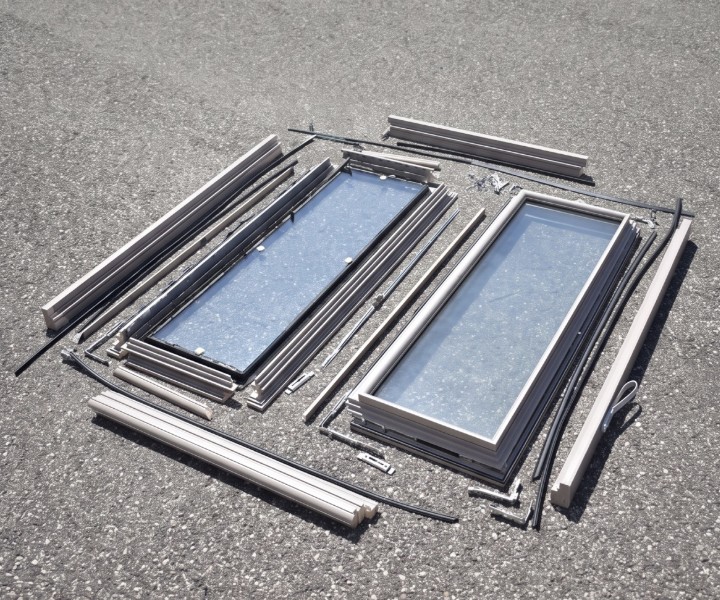
The gap between declared and operational circularity is measured through the traceability of material flows and the adoption of certified Life Cycle Assessment methodologies. Formal circularity often stops at the partial use of recycled content within a linear process, without changing the final destination of the product or planning for its disassembly. Operational circularity requires a paradigm shift: the building component is conceived from the outset to be disassembled, recovered and reintroduced into the production cycle without loss of technical performance. This approach requires transparent data management along the entire supply chain, the adoption of Digital Product Passports and empirical verification that waste materials are not downgraded to landfill, but instead valorised into high-value-added products.
Recovery and second life: selective demolition and direct reuse
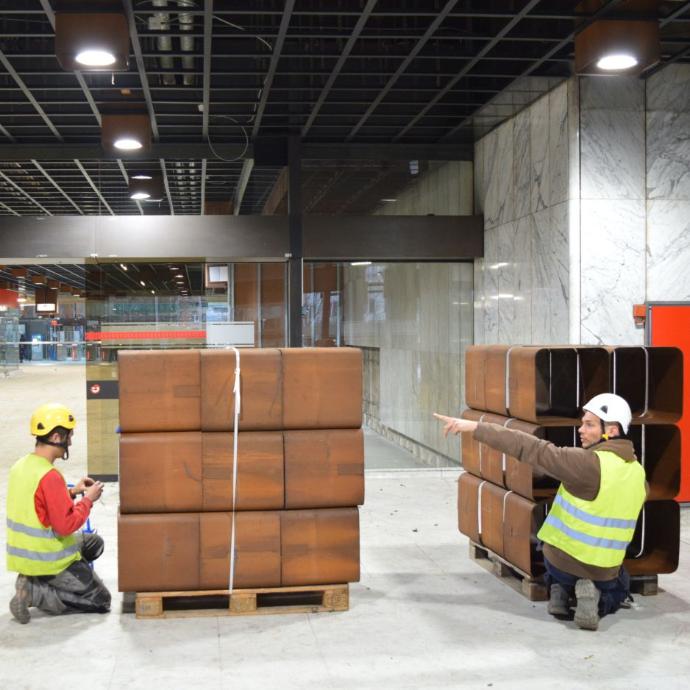
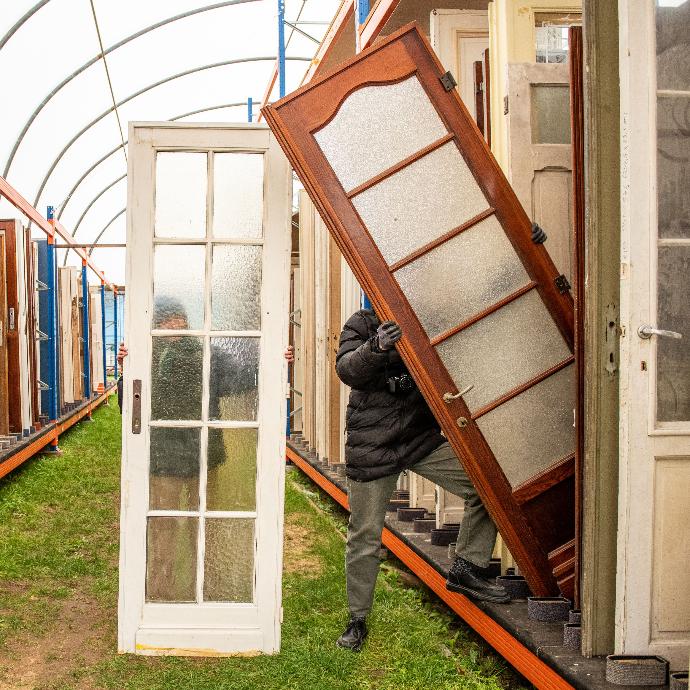
Rotor Deconstruction, a worker-owned cooperative based in Brussels, is today one of the most recognised European operators in selective demolition and the recovery of building components for direct resale. Founded in 2014 with the goal of becoming a central part of a regional ecosystem for the large-scale reuse of building materials, Rotor DC collaborates with demolition contractors, real estate companies and non-profit organisations, progressively expanding its network of recovered material suppliers. The approach goes beyond recycling, aiming for direct reuse: doors, windows, structural elements and cladding are recovered intact and returned to the market, preserving the intrinsic value of the material. Holcim, through its ECOPact line, represents the most structured example on the production side: concrete with 100% performance offering at least 30% lower CO2 emissions compared to standard (CEM I) concrete, obtained from the recovery of demolition aggregates, distributed at industrial scale across Europe. ECOPact demonstrates that even the most consolidated industrial processes can integrate secondary raw materials at scale, provided the supply chain is structured around rigorous quality controls and certified performance standards.
Technical validation: verifying that secondary materials perform
The transition from waste material to certified building component requires a technical validation phase that many supply chains still underestimate. Certimac works on the thermo-physical and mechanical characterisation of materials to validate the durability of products derived from waste. The European project CIRCBUILT, coordinated by the Finnish research centre VTT, develops commercial prototypes including insulation panels made from plant fibres and acoustic materials entirely based on secondary raw materials, grounding the effectiveness of these systems in stable supply chain agreements between manufacturers, testing laboratories and construction companies. The WoodToWood (W2W) project, of which Levery is a partner, addresses the same challenge in the wood supply chain: recovering construction and demolition wood waste into high-value-added materials, demonstrating that cascading valorisation does not necessarily imply a loss in performance.
Applied research: validating supply chains at pilot scale
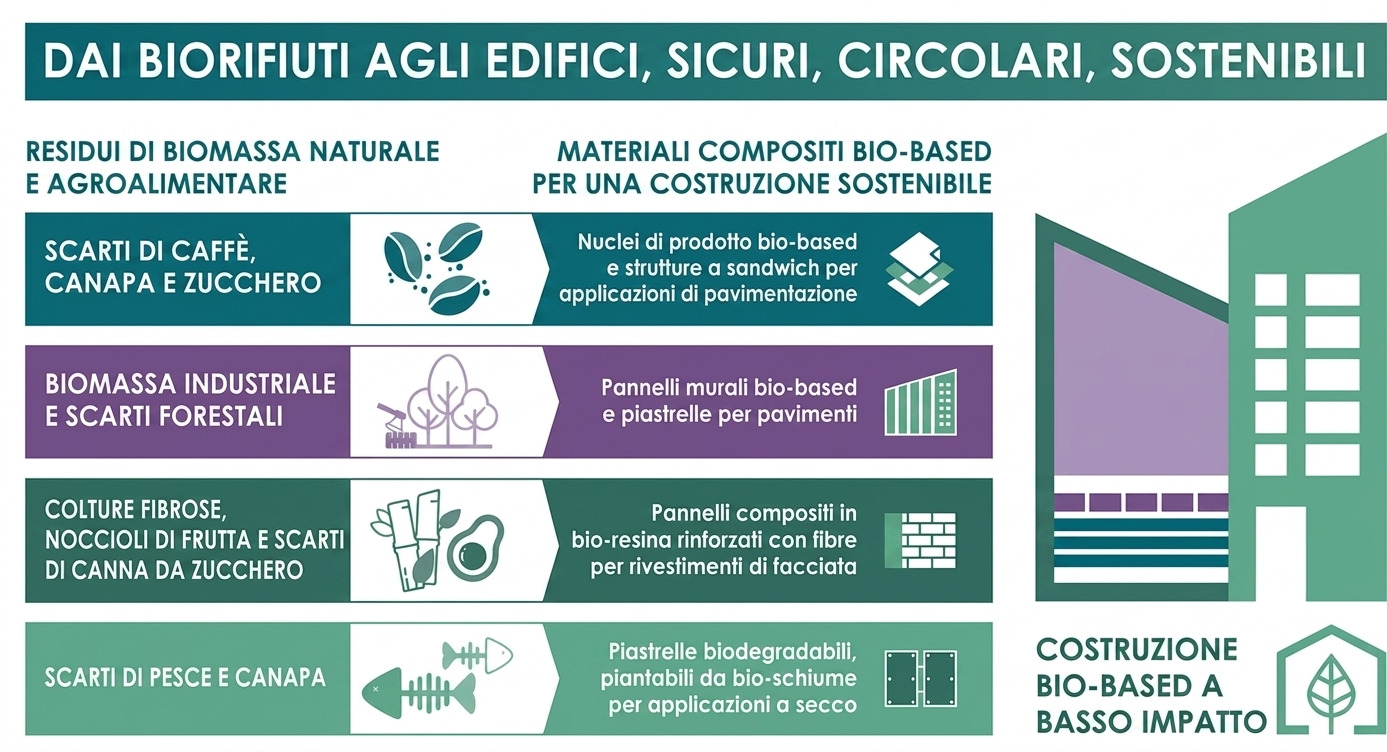
Translating circularity into verifiable technical results is the specific contribution of European research centres. EURAC Research, through its Circular Hub, is developing methodologies to test secondary materials in real contexts, evaluating the performance of building components derived from industrial and agricultural waste and validating approaches before they reach the market. CETMA, a research centre with a strong industrial orientation, works on the topic through projects such as AGRO.BUILD.ER: starting from agri-food waste, it analyses the chemical and physical composition and defines which formulations are suitable for generating new construction materials with certifiable performance. Both centres carry out pilot-scale tests to verify the technical compliance of materials with current regulations, lowering market access barriers for alternative materials.
European coordination: funding and scaling circular supply chains
The initiatives developed within the Circular Bio-based Europe Joint Undertaking (CBE JU) fund and coordinate industrial projects aimed at transforming waste into new building elements. The BIOS MATER project, coordinated by CIRCE and funded by the CBE JU, brings together 22 partners from 10 European countries, including Levery, to develop and validate four new production pathways for bio-based construction products, measuring success through rigorous techno-economic and environmental KPIs defined from the very start of the project.
Digital traceability: the material passport across the life cycle
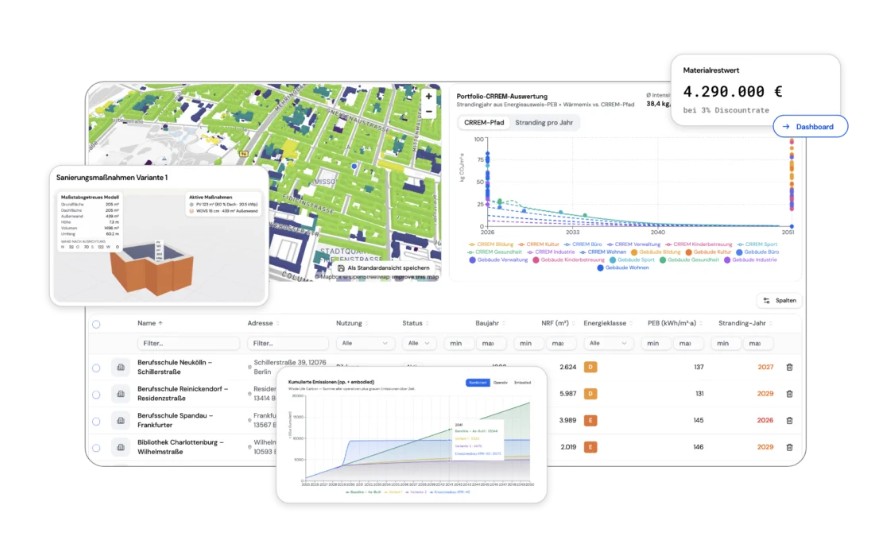
Knowing what a building contains before demolishing it is the premise of any credible circular strategy. Concular, a German startup active across Europe, has developed a platform to systematically classify and catalogue the materials present in an existing building, returning a structured inventory by type, quantity and condition. This makes the built environment legible as a stock of recoverable materials, enabling selective recovery planning before work even begins. On this front, Levery has developed DeePPy, a platform designed for construction material manufacturers who want to structure the digital passport of their products in compliance with ESPR and CPR, scaling from a single product to cover an entire range.
Territorial supply chains: aggregating local actors to close the loop
Economic model transformation requires the aggregation of local actors within structured industrial networks. In Emilia-Romagna, the AGRO.BUILD.ER project, developed under the technical coordination of Levery and with the participation of Agrifood Clust-ER, puts this vision into practice by developing a circular supply chain based on the valorisation of agricultural by-products for the construction sector, creating stable synergies between rural areas and urban contexts. These clusters connect farmers, industrial processors, construction companies and designers, overcoming the fragmentation typical of the construction supply chain, and demonstrate that building regional value chains reduces transport impact, guarantees traceability of secondary raw materials and consolidates a local materials market based on rigorous sustainability criteria.
Conclusion
Circular economy in construction materials already has its protagonists, distributed along the entire value chain, from those who recover and resell components to those who certify them in laboratories, from those who fund European research to those who build digital traceability for products. The connections between these actors are the real accelerator of the transition: every time a manufacturer shares data with a laboratory, a European project brings together diverse competencies, or a territorial supply chain manages to close the loop locally, the system advances. At Levery we work to be one of these connection nodes, bringing technical expertise, digital tools and a network of relationships to support those who want to build their circular strategy on solid foundations.
Stay informed
One email per month. R&D and innovation news for the construction industry.
No spam. Unsubscribe at any time.