Introduction
As the construction industry slowly navigates its digital transformation, a recurring narrative dominates boardrooms and research labs: AI and robotics are reshaping how we build. Yet, beyond the discourse of seamless algorithms and automated sites lies a more nuanced reality. Technology is not replacing the builder, the architect or the engineer: it is redefining their roles. At the heart of this evolution is the concept of Human-in-the-Loop (HITL). Far from being a temporary stepping stone toward fully autonomous systems, human oversight, tactile intuition and creative critical thinking are proving to be irreplaceable anchors. As AI and robotics enter the architectural ecosystem at various scales, from conceptual design to active construction sites and long-term facility management, keeping human “ingenuity” at the centre is both a technical necessity and a socio-ethical imperative. This is not an abstract vision. Across the value chain, actors are already building this approach into their own processes. Design studios use algorithms as co-pilots. Engineers and research centres entrust robots with precision and people with judgement. System manufacturers and start-ups bring to site machines designed to work alongside crews. Building operators adopt tools that amplify the experience of their technicians. In this article we follow them link by link, to understand how they work and what they have in common.
Design studios: the algorithm explores, the architect defines the intent
At the conceptual design scale, the core challenge is balancing algorithmic generation with contextual, emotional and social meaning. This is where some architecture studios are rethinking the way they work, integrating computational tools without handing responsibility for design choices over to the machine. Rather than relying on AI as an autonomous generator of spatial forms, forward-looking computational teams such as ZHACODE, the internal Computation and Design Research group at Zaha Hadid Architects, adopt an approach where generative algorithms function as interactive co-pilots. Here, machine learning models and parametric workflows process vast design spaces, testing thousands of structural and geometric configurations in seconds. However, raw computational efficiency lacks spatial empathy, cultural sensitivity and regulatory intuition. In this hybrid workflow, the human architect shifts from manual draftsman to curator of intent: setting constraints, interpreting algorithmic proposals through a human lens and steering parameters toward qualitative values that a machine cannot compute. The technology expands the horizon of what is possible, but human agency defines what is meaningful. The role of the design studio in the value chain does not change, but the way it is exercised does: less time drawing, more time deciding.
Engineering and prefabrication: digital precision validated by those who know the material
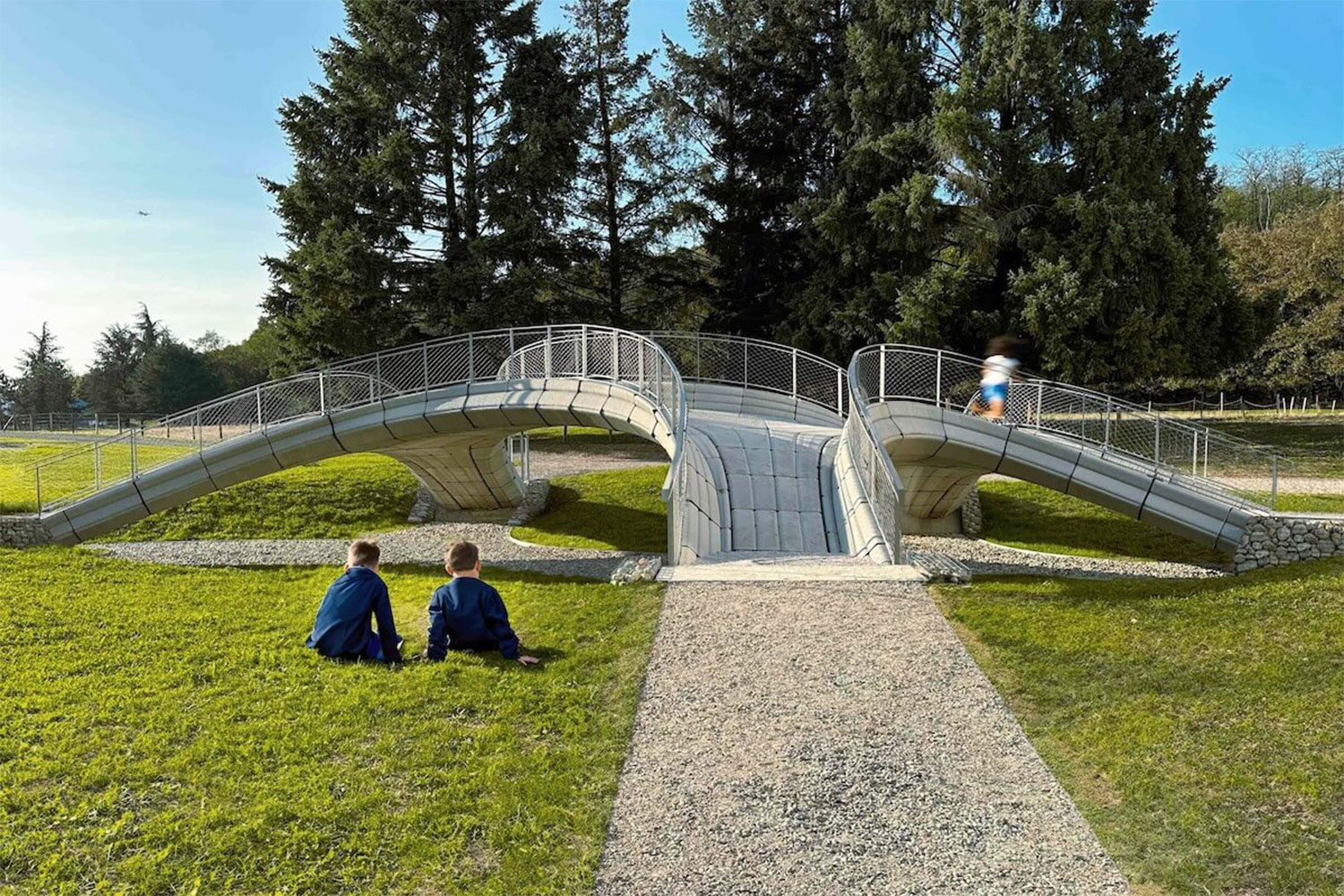
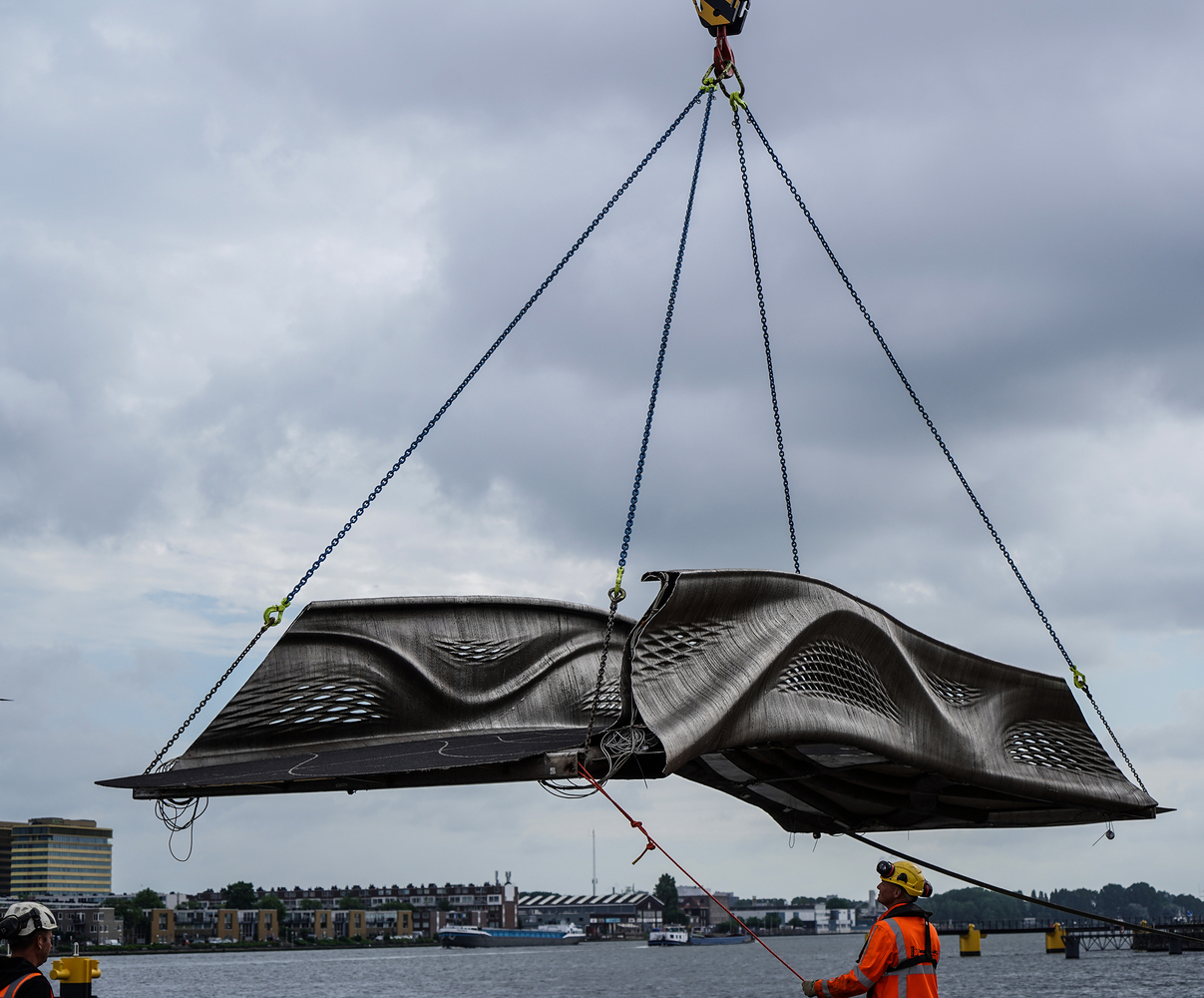
Moving from digital models to physical fabrication introduces an inescapable variable: the unpredictability of materials and real-world tolerances. The engineering approach to Human-in-the-Loop combines advanced topology optimisation algorithms with human ethical oversight and structural domain expertise. A groundbreaking example is the MX3D Smart Bridge in Amsterdam, engineered by Arup in collaboration with MX3D. When 3D printing complex stainless-steel structures or optimising metallic structural nodes with robotic arms, artificial intelligence can push material efficiency to extreme mathematical limits, producing organic, hyper-efficient topologies. Yet algorithms operate under idealised conditions. The structural engineer is the vital validator who evaluates real-world material anomalies, dynamic live-load responses, site tolerances and safety margins. By keeping human oversight at the core of computational engineering, the industry ensures that automated fabrication and robotic assembly remain resilient, adaptable and, above all, safe for human habitation. The Smart Bridge is a landmark project, but the challenge for the value chain is to make this approach repeatable in everyday production. The ICD (Institute for Computational Design and Construction) at the University of Stuttgart is working in this direction within the Cluster of Excellence IntCDC, researching strategies for human-robot collaboration in the prefabrication of building components. The underlying idea is the same as in the work of Arup and MX3D, but brought into the factory: tasks are distributed according to what each does best. The robot takes on precision and repetition, while the operator brings judgement, adaptation to material variations and quality control. For a manufacturer of prefabricated components the message is concrete: automation does not erase the know-how of the shop floor, it turns it into the control point of the process.
Construction sites and system manufacturers: robots for the strain, people for the quality
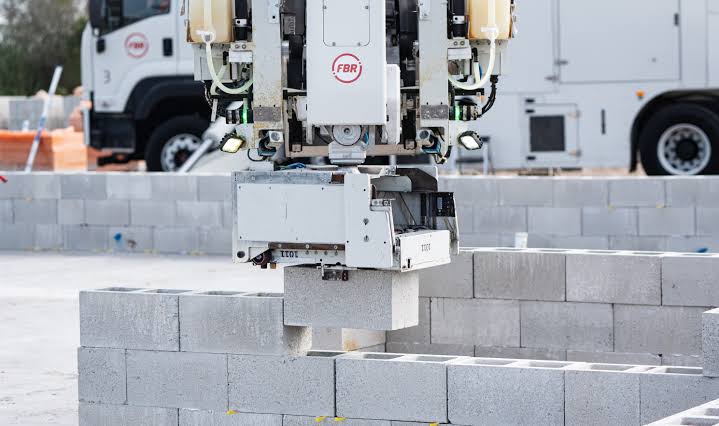
On the construction site, HITL shifts from passive monitoring to collaborative execution. Rather than attempting fully autonomous construction, pioneering robotic systems like Construction Robotics’ SAM100 (Semi-Automated Mason) or FBR’s Hadrian X demonstrate a hybrid approach to task execution. These machines handle heavy, highly repetitive physical tasks, such as lifting heavy masonry units, pumping adhesive or placing bricks with continuous mechanical precision, reducing physical strain on workers. However, real building sites present endless micro-variations that pure automation cannot manage alone: uneven foundations, non-standard mortar consistency, unexpected weather disruptions and tight tolerance adjustments around architectural details. In this collaborative paradigm, skilled masons work alongside the robot as supervisors and fine-tuners. The human operator adjusts spatial alignments, manages complex joint details, ensures bonding quality and handles non-standard corner cuts. The robot provides muscle and speed, but human craftsmanship, tactile sense and adaptability dictate the final quality and structural integrity of the build. The same approach is now entering the strategy of installation system manufacturers. Hilti, a manufacturer of systems and tools for construction, has developed Jaibot, a semi-autonomous ceiling drilling robot designed for MEP contractors. The robot reads BIM data, positions itself and drills while detecting obstacles. The operator moves it between work areas and can override the design model when something on site does not match. This is a significant step for the value chain: human-machine collaboration is no longer proposed only by robotics start-ups, but also by the long-standing supplier of installation crews. Hilti integrates the robot into its product ecosystem and leaves control of the work to the people who carry it out.
Operations, maintenance and logistics: technologies that amplify field expertise
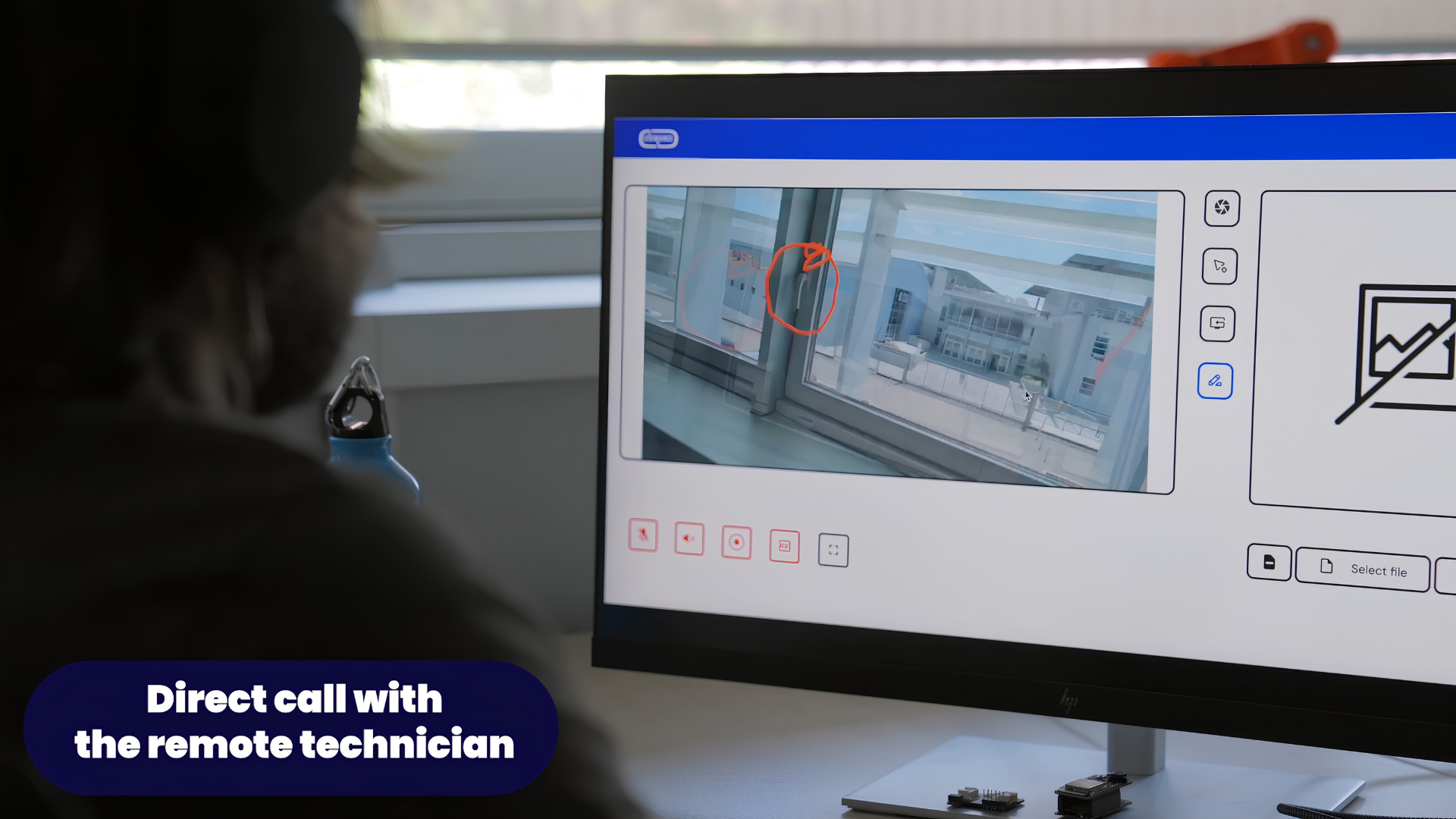
In the long-term operation and maintenance phase, the main barrier to efficiency is rarely a lack of data, but rather data overload and the disconnect between digital models and physical interventions. We at Levery are moving in this direction with ARyze, the platform we are developing for facility management. Our approach is human-centric: it focuses on enhancing the field worker rather than automating manual tasks away. By combining augmented reality (AR) with structured digital product data, maintenance technicians receive real-time contextual information layered directly onto their field of view. This model treats digital tools as cognitive amplifiers. The system organises complex BIM layers, historical maintenance logs and component diagnostics, while the technician relies on tactile intuition, spatial problem-solving and accumulated hands-on experience to carry out physical repairs. Rather than replacing human labour, the digital infrastructure empowers field personnel, ensuring that tacit industry expertise remains the centrepiece of building lifecycle management. KEWAZO, a start-up founded in Munich within UnternehmerTUM, takes a similar approach to site logistics and industrial plant maintenance. Its Liftbot is a remote-controlled lifting robot for scaffolding: the machine handles the vertical transport of materials while the crew stays in control of operations. The data collected by its ONSITE platform gives planners a clear view of timing and progress. Liftbot is used at large industrial sites such as BASF, Dow and TotalEnergies, together with scaffolding contractors such as Bilfinger and Altrad. With different tools, ARyze and Liftbot share the same logic: technology removes strain and organises information, while decisions remain with those who know the work.
Beyond efficiency: the social dimension
The slow integration of AI and robotics in construction is not merely a technical bottleneck, it is a profound social transition. When we automate tasks without safeguarding human centrality, we risk alienating the workforce, eroding traditional craftsmanship and creating opaque decision-making loops where accountability vanishes. A true HITL paradigm protects the dignity of labour. It ensures that the tacit knowledge accumulated by workers on site for decades feeds back into digital systems, bridging the gap between high-level engineering theory and practical execution. The actors described in this article, from design studios to system manufacturers and from research centres to robotics start-ups, show that this choice does not slow innovation down. On the contrary, it is the condition for the people who do the work to actually adopt it.
Conclusion: designing the future together
As research and industry pioneers, our goal should not be to chase an elusive, fully autonomous utopia. Instead, it is to design collaborative ecosystems where algorithms process data at scale, robots handle repetitive physical strain and human ingenuity focuses on what it does best: questioning assumptions, fostering creativity, adapting to the unexpected and building spaces for people, by people.
References
https://www.zaha-hadid.com/design/striatus/https://mx3d.com/projects/mx3d-bridge/https://www.itke.uni-stuttgart.de/https://constructionrobotics.com/sam100/https://www.fbr.com.au/hadrian-xhttps://www.hilti.com/content/hilti/W1/US/en/business/industries/construction-robotics/jaibot.htmlhttps://kewazo.com/https://aryze.it/Stay informed
One email per month. R&D and innovation news for the construction industry.
No spam. Unsubscribe at any time.